News & Reviews

Camera Austria's Christina Töpfer writes about Model Citizens
for Austria's Tagebuch Magazine in the "Images of Negotiation" column.

Quoted in the New York Times about reading photographs from Guantánamo Bay
in Carol Rosenberg's article,
"A Curious Collaboration Between Prisoners and the Military at Guantánamo."

Model Citizens exhibition profiled in Poland's quarterly photographic magazine, Kwartalnika Fotografia.

"an internationally recognized photographer known for images that—
through a disorienting grace—
explore the thin line between reality and fiction in post-9/11 America."
— Full-page interview with Luca Fiore in Italy's Domani.

Podcast episode on Polish National Radio, an interview with Iga Niewiadomska translated into Polish.
"the found footage film Pineland/Hollywood... left a profound impression on viewers (I observed the reactions with attention and a certain satisfaction), composed of fragments of classic American cinema, not just action films... rais[ing] uncomfortable questions about what is real, who is watching, and how visual knowledge is constructed."
— Exhibition review of Model Citizens and Pineland/Hollywood at Fotofestiwal Łódź (in Polish).

"precyzyjna, wizualna wiwisekcja amerykańskiej fikcji"
"a precise, visual vivisection of American fiction"
— Poland's Format Magazine reviews Model Citizens at Fotofestiwal Łódź.

Rieke Havertz profiles Necessary Fictions and Model Citizens,
with a photo essay in the German daily, Die Zeit.
"Debi Cornwall (US) presents . . . a surreal document of fake American towns built by the military for training purposes, where civilians play insurgents and everyday life is acted out for the purposes of war. A former lawyer turned visual critic, Cornwall also screens a film and exhibits a second project, reinforcing her place as one of the most politically sharp image-makers working today."
— EEP Berlin on Model Citizens at Fotofestiwal Łódź.

Interview on the Model Citizens exhibition at Fotofestiwal Łódź
in the Polish monthly magazine, Wysokie Obcasy Extra.

"Debi Cornwall understands that images model reality
in order to naturalize their remaking of it."
— Barry Schwabsky reviews Model Citizens in Border Crossings Magazine #167.
Miss Rosen profiles Welcome to Camp America: Inside Guantánamo Bay, for a new generation in Animal NY.

Model Citizens on show June 12 to 22 at Fotofestiwal Łódź, Poland.

"three separate but thoughtfully intertwined threads ... incisively tell her layered story. . . It's when Cornwall merges these three bodies of work into a single flow that the artistic magic really happens . . . a pleasing sense of juxtaposed confusion . . . And it is this disorienting synthesis which makes Cornwall's observations about the performative nature of contemporary American culture so powerful. . . Which ultimately makes Model Citizens the most biting of Cornwall's three projects. As the years have passed, the fictions she has been tracing have become more pervasive and destabilizing, our own fantasies and delusions turned back on themselves and amplified for effect. . . [P]erhaps its perceptively layered observations can provide a visual argument that will catalyze some much needed discussion about the who, the what, and the why of the pervasive performance that now surrounds us.
— Loring Knaubloch reviews Model Citizens for Collector Daily

Interview in Hot Mirror.
"Hard-hitting work" that "delved deep into the psyche of the American citizen"
— Model Citizens on Público P3's "melhores fotolivros de 2024" (in Portuguese).
Pineland/Hollywood screens at le Confort Moderne in Poitiers, France
as part of its series, "Ciné Moderne: Working Days."
Pineland/Hollywood screens at le Cinéma de l'Appartement, Images Vevey in Vevey, Switzerland,
from 27 November 2024 to 16 March 2025.

On Wednesday, 4 December, in conversation about Model Citizens
with NYU's Joan Kee and The New School's Cresa Pugh.
Cosponsored by NYU's Institute for Public Knowledge and Grey Art Museum.
"Cornwall’s study of citizenship is . . . thoroughly original, engrossing and unforgettable”
— Model Citizens reviewed amongst "Our Favorite Photo Books of 2024, What Will You Remember.

"Cornwall returns with Model Citizens (Radius Books), completing the trilogy with an unnerving expose of the banality of evil that hides in plain sight, filtered endlessly through media and entertainment. Weaving together fragmented scenes made from 2018–2023 at MAGA rallies, local museums, and during US Border Patrol Academy training scenarios, Cornwall creates a perilous portrait of a nation spiralling into fascism. . . With Model Citizens, Cornwall crafts an unnerving meditation of collective delusion inside the imperial core."
— Miss Rosen on Model Citizens for Huck Magazine

Three book events at Paris Photo
Thursday, 7 November 2024:
4pm, The Eyes Artist Talk
Galerie Courbe (1st Floor curved gallery), Grand Palais
5pm, Citoyens Modèles book signing
Éditions Textuel, Booth K01, First Floor, Grand Palais
Friday, 8 November 2024:
2pm, Model Citizens book signing
Radius Books, Booth K04, First Floor, Grand Palais
"Debi Cornwall’s bold photography interrogates the performative aspects of power with a special interest in America’s military might and imperial grip on the world. . . In this latest project," she "turns her gaze from the state apparatus to the public . . . to capture the various ways in which nationality is imagined, staged, and cosplayed in these divided states of America."
— Hyperallergic recommends Model Citizens.
". . . everything seems real and yet…
The former civil law lawyer is passionate about the myths that make America.
Premonitory in this election period."
— Model Citizens at Arles, reviewed in 9 Lives Magazine (in French).
— Álex Vicente reviews Model Citizens at Arles for El País (in Spanish).

". . . the exhibition 'Model Citizens' by American Debi Cornwall . . . questions the fictions that accompany the embodiment and exercise of power in the United States . . . In a country where the notion of reality is regularly manipulated, these real images of places that do not exist. . . are quite destabilizing. The Model Citizens series illuminates . . . the way in which violence, which accompanies representations of power, contributes to shaping the national narrative and ends up contaminating the notion of reality in the minds of citizens themselves."
— Review of Model Citizens at Arles, in Paris Art Now (in French)
Model Citizens, like Debi Cornwall's two previous works . . . is a deeply political work. Model Citizens is a different project from the previous ones. Cornwall chose to look inside the country, focusing on the mechanisms of cultural transmission. . . on the fictions that sustain them. But not only that. She looked for signs, in their surroundings of something that is, in essence, immaterial, that exists only on the psychological level of North American citizens: their cultural identity."
— Ana Marques Maia on Model Citizens for Público's Ípsilon (in Portuguese)

Interview with photographer Paola deChapdelaine.

"bewitching photos"
— Arno Haijtema on Model Citizens at Arles for de Volkskrant (in Dutch)

Interview about Model Citizens with Stéphane Gobbo in Le Temps (Switzerland) (in French).

"Dans un registre discordant, couleurs tranchantes et mise en scène au cordeau, Debi Cornwall, exposée dans le vaste Espace Monoprix, permet de mesurer le chemin parcouru par la photographie engagée lors des dernières décennies. . . elle invente de troublants dispositifs pour questionner les représentations de la violence et l’état de conflit permanent de l’Amérique moderne. . . l’exposition offre un parcours sidérant au cœur des simulacres pour se refermer sur d’autres rituels tout aussi effrayants : ceux des militants pro-Trump sur le pied de guerre. "
". . . Debi Cornwall, exhibited in the vast Espace Monoprix, allows us to measure the progress made by photography undertaken in recent decades. . .. disturbing devices to question representations of violence and the permanent state of conflict in modern America. . . the exhibition offers a stunning journey into the heart of the simulacra. . . ."
— Laurent Rigoulet profiles Model Citizens at Arles
for Télérama Magazine.

"Debi Cornwall's photographs evoke war zones or disaster zones, in an enigmatic and ambiguous way. . . In a world bathed in images and crossed by competing narratives, the photographer shows how state and military power produces its own narratives, which compete with those produced by the media. . . Amidst all this is a very different work, a montage film entitled Pineland/Hollywood, which turns out to be the most striking. It’s hard not to be caught up in this suspenseful story…. This vertiginous drop into the abyss is all the more effective as the spectator is caught up in the story despite herself, lulled and anesthetized by the pleasant memory of the films she recognizes on the screen... But the artist emphasizes that the normalization violence and the creation of fictions that legitimize it are not reserved for American society alone..."
— Claire Guillot reviews Model Citizens at les Rencontres d'Arles for Le Monde (in French).
"Une incroyable video expérimentale, Pineland/Hollywood. . . ."
— Jérémy Piette reviews the Model Citizens Rencontres d'Arles exhibition in Libération.

"Un véritable tour de force...
Debi Cornwall's visual language is, at first glance, seductively simple: clean images, carefully composed, with particular attention to detail and color. However, on closer inspection . . . the wax mannequins seem strangely authentic, while the real people have something artificial. The line between reality and fiction is blurring. One might have expected, coming from a former civil-rights lawyer, a well-constructed plea, the kind that leads a jury to a clear and unambiguous conclusion, served on a silver platter. But her artistic posture is radically opposite, constantly questioning what we see and the very idea of linear narratives, of "storytelling" which allows the viewer to passively assimilate information to better move on to something else. Debi Cornwall has thus been able to make juxtaposition, incongruity and dissonance her weapons for thinking and making people react."
— Éléonore Simon on Model Citizens at les Rencontres d'Arles for Process Magazine (in French).
"ses cadrages singuliers et ses compositions précises"
— La Critique on Model Citizens at Arles.
". . . Les images semblent innocentes, . . . mais c’est justement son propos: souligner la banalisation de la brutalité et son lissage qui mènent à son intégration profonde dans ce qui définit la citoyennet��."
—Yann Zitouni on Model Citizens at Arles for Tribune de Genève Sunday.

"We reinforce fictions, visually and physically, this exhibition reminds us, in our daily lives. These are the images we make for ourselves—and the consequences are well known."
— Alexander Morrison reviews Model Citizens at Arles for The Art Newspaper.
"Debi Cornwall delivers a chilling portrait of the United States that she extends to Western society. Between larger-than-life war training camps, Donald Trump rallies and American heroization in history museums, the former lawyer specializing in human rights questions the role of the "model citizen" in a society where entertainment normalizes violence
("Model Citizens", Espace Monoprix)."
— Zoe Isle de Beauchaine on the 2024 Rencontres d'Arles
for The Art Newspaper, French Edition

"An extraordinary work in an extraordinary place at the Arles Photo Festival:
If you want to see Model Citizens, you have to walk straight through the Monoprix department store to the lingerie department - from there you go up the steps to the exhibition in which Debi Cornwall deals with power, war and the self-image of the USA. "
— Damian Zimmerman on the "ten most discussed exhibitions" at Arles, for fotoMAGAZIN (Germany) (in German).

"Tout est vrai est tout est faux"
— Pépite Podcast interview with Charlotte Pudlowski
on Model Citizens at Arles (also on Spotify and Apple).

"Any modern state that aims to control society relies on powerful myths and stories about heroes. . . The show, based on two long-term projects: Necessary Fictions and Model Citizens, is one of the strongest propositions this year. It reflects on citizenship, violence, military culture, and the state’s self-perception from many unexpected perspectives."
— Grażyna Siedlecka recommends Model Citizens at Arles,
in Contemporary Lynx Magazine.
Interview with Zoë Isle de Beauchaine on Model Citizens at Arles
in l'Œil de la Photographie.

"In Model Citizens, Debi Cornwall questions the representations that constitute the mythologies of North America. In a country so governed by spectacle, she explores the fictions that shape Americans' vision of themselves . . . Where documentary, in its best vein, borders on cultural anthropology."
— Jean-Marc Bodson reviews Model Citizens as one of "Five Exhibitions Not to Miss" at Arles, in La Libre (Belgium) (in French).

"Il faut noter au passage que plusieurs expositions (celle très impressionnante de Debi Cornwall à Monoprix ; celle de Randa Mirza, sur Beyrouth, à la Maison des peintres ; « Fashion Army » à Ground Control) portent sur la question de la guerre et de sa représentation, marquant la nécessité d’une distanciation pour comprendre ce qui est en œuvre dans l’usage même de l’image à ce sujet."
— Revue Esprit on Arles 2024.

"Debi Cornwall ("Citoyens modèles", Espace Monoprix) mêle[] documentaire, réalité et fiction. Les regardés ont davantage de stratégie consciente et incitent les regardeurs à photographier autrement: sans doute une retombée de l’accès à l’image et à l’information, démultipliés par les réseaux sociaux.
Avec Citoyens modèles, Debi Cornwall traverse la fine surface qui sépare la fiction et la réalité (fictive) de l’Amérique. La géométrie de ses compositions trouble le regard en crevant la surface des scénarios réalistes immersifs des camps d’entraînement d’unités frontalières, des meetings de Trump et des musées présentant les Américains en vainqueurs ou victimes innocentes."
"With Model Citizens, Debi Cornwall crosses the thin surface that separates fiction and the (fictional) reality of America."
— Model Citizens at Arles reviewed in l'Écho (Belgium).

"the American Debi Cornwall, at the Espace Monoprix, explicitly questions the documentary value of images and, with “Model Citizens”, explores the fictions of American society. . . ."
— Luca Fuori on Model Citizens at Arles for Il Folgio (in Italian)

Recommending Model Citizens at Arles:
"The relief when you discover they are not real is short-lived.
This realistic role-play walks a razor-thin line."
In its round-up of Arles exhibitions to see, Elle Italia recommends
Model Citizens as a "provocative investigation."
Interview with Rebecca Amsellem about my practice, Model Citizens at Arles, and what a feminist utopia would look like, in Les Glorieuses (en français).
"Artfully captured to add movement and tension where there is none . . . one seamless narrative."
— British Journal of Photography reviews Model Citizens.
Interview with Ben Smith for A Small Voice podcast.
Interview with Jindra Kratochvil for the Radio Anthropocène Podcast.

Discussion of Model Citizens at Arles in the Radio Canut Podcast
at 11:25-17:50 (in French).
"la face cachée du rêve américain documentée par Debi Cornwall"
— Shout-out for Model Citizens at Arles in Numéro Magazine.
Model Citizens exhibited at les Rencontres d'Arles.
1 July to September 29, 2024.
The New York State Council on the Arts (NYSCA) has awarded me an Individual Artist Grant to develop my multi-channel short film on school lockdown drills and active-shooter simulations, This is (Not) a Drill.

"Debi Cornwall is a different kind of witness for a media age in which photography is in danger of losing its capacity to make us feel and think."
— Interview with Lyle Rexer in the September/October 2023 issue of Photograph Magazine.
In conversation with writer-curator-critic Lyle Rexer in the PhotoFairsNY Program Lounge.

"œuvres poignantes donnant à voir les dérives d’un monde sous l’emprise de ses propres contradictions. . .
Debi Cornwall nous invite à lire entre les lignes. À démêler – ou fusionner davantage – le faux et le vrai pour faire émerger des questionnements, tracer des limites, prendre du recul sur l’état de notre monde. . .
Une amorce tout en nuance dont il nous tarde de découvrir la forme finale."
". . . poignant works showing the excesses of a world under the influence of its own contradictions . . .
Debi Cornwall invites us to read between the lines. . .
A nuanced beginning whose final form we can't wait to discover."
— Lou Tatsas reviews the work-in-progress exhibition of Model Citizens,
on view at Photo Elysée (Lausanne, Switzerland) through 1 October 2023, in Fisheye Magazine.
I have been awarded the Prix Elysée, the biennial juried contemporary prize
for mid-career photographers created by the Photo Elysée Museum in Lausanne, Switzerland, with the support of Parmigiani Fleurier.

I'll be giving a talk at the V&A Museum in London alongside Lisa Barnard on 12 July 2023. Free, register here.
A work-in-progress installation of Model Citizens will be
exhibited at Photo Elysée from 29 June to 1 October, 2023.
Jade Helm is an Official Selection at the Freep Film Festival.

Pineland/Hollywood screens at the Museum of Contemporary Art San Diego,
followed by a talkback with multimedia artist and UCSD Prof. Michael Trigilio.
Jade Helm is an Official Selection at the Sebastopol Documentary Film Festival.

Jade Helm has been selected as one of ten finalists for the Mini-Doc Competition at the
Big Sky Documentary Film Festival.
Pineland/Hollywood is shortlisted as a finalist for the 2023 Aesthetica Art Prize.
A glimpse of my work-in-progress as a 2022-24 nominee of the Prix Élysée
on view at the Photo Élysée booth at ArtGenève.

Jade Helm will have its North American Premiere on 18 February 2023 as an Official Selection of the 20th annual
Big Sky Documentary Film Festival.
Hyperallergic lists Tea, Torture, and Reparations at #3 on its list of "Top 50 Exhibitions of 2022" worldwide: "Remaking the Exceptional: Tea, Torture, & Reparations | Chicago to Guantánamo managed to be enraging, heartbreaking — and replete with the humanity of creative resistance. . . The art here was documentary, conceptual, legalistic, therapeutic, representational, memorializing, and visionary."

DePaul Art Museum's Tea, Torture, and Reparations exhibition, which included works from Welcome to Camp America: Inside Guantánamo Bay, is listed in the Chicago Tribune's Best Art Exhibitions of 2022.
Pineland/Hollywood has been awarded the Jury Prize for Best Experimental Short at the Boston Short Film Festival.

Beaux Arts Magazine (in French) profiles my work and the project I'm developing as a Prix Élysée nominee.
I am a nominee for the Prix Élysée,
one of eight mid-career photographers nominated for the biennial Swiss prize supporting the development of a new body of work.
Pineland/Hollywood is an official selection of the 29th Chicago Underground Film Festival.
Pineland/Hollywood is an official selection of the Boston Short Film Festival.
Pineland/Hollywood awarded the Jury Prize for Best Short at the 21st SF DocFest.
Pineland/Hollywood is an official selection of VideoEx, the 24th Experimental Film & Video Festival in Zurich, Switzerland.
". . . portraits, at least profound ones, are never just about likeness, and these men, released from Guantanamo after having been held for years without charge, appear still marked by the U.S. military’s rule against photographing the faces of imprisoned people. These pictures belong to 'Beyond Gitmo, a haunting series by Debi Cornwall that’s part of 'Remaking the Exceptional: Tea, Torture & Reparations | Chicago to Guantánamo,' an ambitious group exhibition at the DePaul Art Museum that is at once enraging, heartbreaking and replete with humanity."
— Lori Waxman reviews "Tea, Torture & Reparations" at DPAM.
My short found-footage documentary, Jade Helm, premieres as an official selection of the 13th
Ghent Viewpoint Documentary Film Festival.

In Debi Cornwall’s images. . . Guantánamo Bay appears strangely serene and constructed, but also bright, piercing and uncanny. . . What makes Cornwall’s images compelling is how mundane they appear at first. . . These crisp, saturated scenes belie the violent nature of their location. Cornwall has an eye for near-perfect symmetry, but often leaves one small detail askew to remind viewers of what we’re seeing. . . Her images of Gitmo souvenirs . . . are darkly humorous, but also demonstrate how quickly the atrocities have been painted over with American consumerism. . . it is important to see Cornwall’s three series together to understand not only how the state attempts to wrangle narratives towards its own interests, but also to see the ongoing human consequences of an unjust prison complex that is still running.
— Review of Welcome to Camp America: Inside Guantánamo Bay exhibition and talk at Xposure Festival Sharjah, in The National.
Pineland/Hollywood is an official selection of the 22nd D.C. Independent Film Forum.

"harrowing symbolic power"
— Review and Interview upon the opening of Welcome to Camp America: Inside Guantánamo Bay exhibition at the Stadthaus Ulm, Germany.

"Nach Ende der Führung durch Debi Cornwall's Ausstellung habe ich das Gefühl noch nie so viel in so kurzer Zeit gelernt zu haben. Nicht nur hinsichtlich des geschichtlichen und politischen Aspektes, sondern auch inwiefern Kunst und Fotografie ein Gefühl und eine Geschichte übermitteln können."
"After the tour of Debi Cornwall's exhibition, I feel like I've never learned so much in so little time. Not just in terms of history and politics, but also how art and photography can convey a feeling and a story."
— Exhibition review, Welcome to Camp America, Stadthaus Ulm

Necessary Fictions shortlisted for the 2021 Lucie Foundation Photo Book Prize.

My experimental short film, Pineland/Hollywood, premieres as an official selection of interfilm,
the 37th International Short Film Festival Berlin.
"There are at least one thousand ways to read Debi Cornwall's Necessary Fictions, and I recommend to try them all... With every read, though the words and images stay the same, the book changes. . . In between her believability and the breadcrumbs of doubt flows the liquid river of truth. . . No matter which lens readers choose to wear, their ears will ring with explosions and their nose will fill with unmentionable smells. But when the smoke has cleared and the wounds rinsed off, the questions will remain."
— Dana Melaver in Zeke Magazine at p. 73.
Richard B. Woodward on Welcome to Camp America: Inside Guantánamo Bay in "How 9/11 Changed Art."
"Necessary Fictions asks both what kind of world empire intends as well as how a conceptual photographic project engages with that sensory numbness. . . Moving from the novel’s Jumbotron to eye level, from the omniscient third-person narrator’s access to interiority to surface and from the triggering effects of sensory overload to the still photograph, Cornwall’s work . . . question[s] the simulations portrayed and viewers’ own relationship to them. . . The result is a project that refuses spectacle and moves instead from documenting the conditional world of simulation to the subjunctive mood of the hypothetical, the what if.
— Alexandra S. Moore reviews Necessary Fictions for The Polis Project.

The "subject of Debi Cornwall’s nuanced book Necessary Fictions, is Atropia. . . [L]ittle by little, 'slippages' appear in her pictures, hints that there’s something off. . . Photographs and texts from a variety of sources. . . gradually coalesce into a complex picture of what Cornwall calls a 'state-created reality'. . . . Cornwall designed the book to offer multiple perspectives, both visual and textual. . . portraits that are sweet, surreal, and heartbreaking all at once . . . underscore a thread throughout the book, a critical consideration of photography and its unreliability as a factual document."
— Jean Dykstra reviews Necessary Fictions in The Brooklyn Rail.
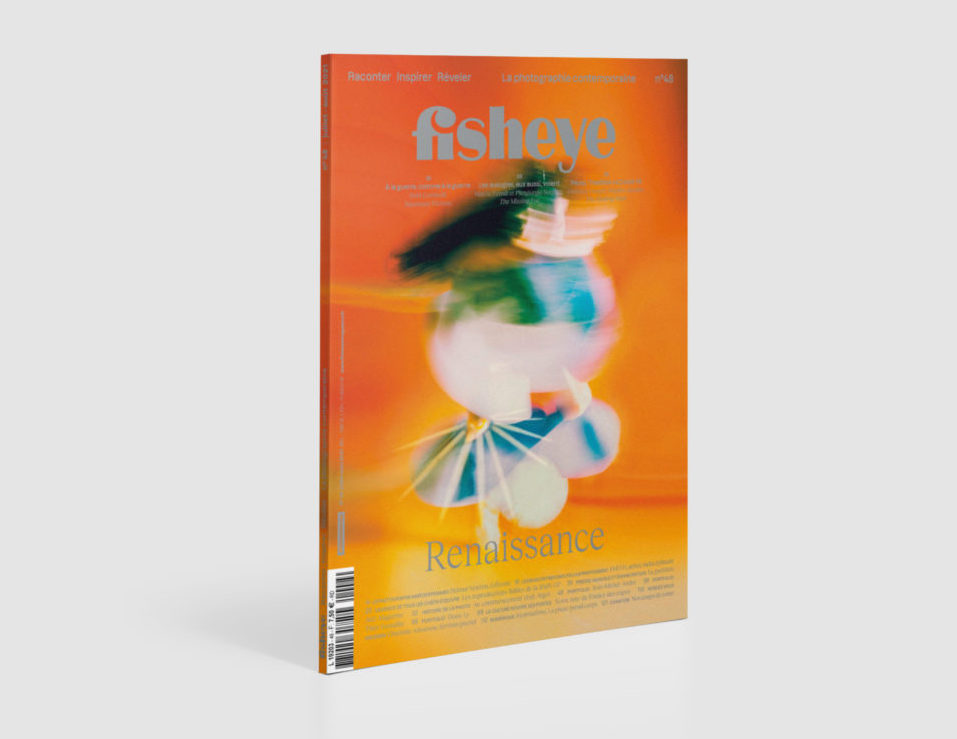
A nine-page spread and review of Necessary Fictions appears in Fisheye Magazine #48.

"The stringency of these protocols makes civil rights attorney-cum-photographer Debi Cornwall’s contribution to the GTMO genre that much more remarkable. . . . Her 2017 book Welcome to Camp America: Inside Guantánamo Bay combines photographs of the base with declassified archival material and first-person narrative text to make palpable and knowable so much of what Joint Task Force Guantánamo Bay and the American executive would keep us from seeing. The book contains the full freakishness of the American truth Jessup proclaimed on screen some two and a half decades prior. . . The viewer need not know what happened here to know what happened here."
— "The Genre Guantanamo Made," by Miriam Pensack.

". . . Pourtant, très vite, on comprend l'intelligence et l'incroyable force de ce projet. . . C'est dire si elle connait l'importance des détails, du non-dit et, en l'occurence, du non-montré. . . un dossier d'accusation aussi complet qu'impitoyable. . . Car la photographe utilise aussi l'humour comme arme non l'��tale mais bougrement efficace. . . La troisième serie, 'Beyond Gitmo,' vient alors clôturer le parcours de manière magistrale. "
— Exhibition review of Welcome to Camp America at the Musée de la Photographie à Charleroi, in MAD (culture supplement to Belgian daily, le Soir).

"Cornwall’s creative freedom was very limited in the camp – but despite these rules & strict controls, she shows a staggering image of 'Gitmo' in seemingly neutral, objective images. . . Camp America is an exhibition that makes us think about the scope of law, about freedom, about the role of the government. An exhibition about human rights that are curtailed in the name of reasons of State. Cornwall is kicking our conscience with Guantanamo as an example. . . ."
— John Devos reviews Welcome to Camp America at the Musée de la Photographie à Charleroi, for l'Oeil de la Photographie.
"Krieg und Fiktion," Interview with Tom Seymour about Necessary Fictions in the March 2021 print issue of Fotomagazin.

Musée de la Photographie à Charleroi Director Xavier Canonne is interviewed on RTBF (Belgian radio), about the current
Welcome to Camp America: Inside Guantánamo Bay exhibition (at 22:32, en fran��ais).

La Libre newspaper reviews Welcome to Camp America: Inside Guantánamo Bay exhibition at the Musée de la Photographe à Charleroi, Belgium.

"What Cornwall brings to the table is an extremely systematic and methodical artistic mindset . . . with persistence and refined logic. . . The photobook itself rewards 'reading', as the front to back progression flows with an internal logic that builds from one subject to the next. . . Cornwall’s photobook walks a delicate line, documenting a set of realities (which are themselves fictions) but also forcing us to see the absurdities embedded in them. Cornwall offers us a parade of seemingly deadpan images and texts, which then pull us down a rabbit hole of nested complications, complexities, and contradictions that feel much more intertwined than we ever realized. . . [T]he conclusions we must draw from what she systematically presents become all the more puzzling and ominous the more we consider them.
— Loring Knaubloch reviews Necessary Fictions in Collector Daily.

In conversation with Brad Feuerhelm for his Nearest Truth podcast.

Necessary Fictions "is a follow-up of sorts to Cornwall’s exceptional examination of the prison at Guantánamo Bay. . . It’s a theater of the absurd. . . It all makes sense when looked at through the lens of war. Though if you step back just a bit with a critical eye, . . . this is where Cornwall’s work really shines. . . It��s a smart book. The photos are great, but all in all, as a book, it’s exceptional."
— "At Least One Thing Was Great About 2020: These Photobooks," Mother Jones.

Elizabeth Avedon names Necessary Fictions among the Best Photography Books of 2020.
Laura Roumanos selects Necessary Fictions for Photo Vogue's Best Photobooks of 2020.

"Debi is a former human rights lawyer, so one would expect this to be an extremely learned and well-researched body of work, and it certainly is that. But she is far, far more than a lawyer with a camera; these are finely crafted, intelligent photographs that collectively form the darkest of dark comedies."
— Mark Power's Top 10 Photobooks of 2020, Photobookstore (UK)

"Necessary Fictions is a continuation of conceptual documentary artist Debi Cornwall's dark-humored approach shown in her award-winning exploration of Guantánamo Bay in Welcome to Camp America. . . Twenty years after 9/11 and the start of the War on Terror, Necessary Fictions takes a good look at how far we've come in filling the needs of the military-industrial complex as efficiently as possible."
— Donny Bajohr & Jeff Campagna, "The Ten Best Photography Books of 2020," Smithsonian Magazine.

Debi Cornwall. . . is a committed artist with searing intelligence and a sharp eye willing to take on some of the thorny issues of our time. . . . The design, page layout, striking cover, and balance of photographs to text is elegantly presented. There are compelling surprises amongst the pages, add-ins and different paper sizes and a print in an envelope at the end of the book. A real treasure.
—Matthew Flowers, Managing Director, Flowers Gallery
I think Necessary Fictions is one of the finest produced books I have ever seen. The sequencing is unexpected as the story unfolds from page to page, with surprises throughout. Personally, it is the first photobook I have ever read cover to cover in one sitting. Beyond fantastic!
—Catherine Edelman, Founder, Catherine Edelman Gallery
Debi Cornwall may have perfected the next generation of visual storytelling with her novel-length photobook, Necessary Fictions. Mostly visual, with masterly restraint in the images and their presentations (simple, pared down, nothing extraneous or distracting) accompanied with haiku-like observations, quotes, snippets of conversation, ad copy, factual lists and inventories, government purchase orders… It’s about war games and simulations with extreme psychological fidelity. It’s a true story and a stunner.
—Jim Casper, Editor, LensCulture
—"Favorite Photobooks of 2020," Lensculture.

Debi Cornwall’s bright, bleak and spare imagery wrestles with an inherent paradox: the artifice and necessity of war games. With a rare perspective, at once entranced and dispassionate, Cornwall examines staged desert landscapes, enemy role players and soldiers-in-training with discerning detail and a visual sensibility for composition and palette that is splendidly sophisticated. This deeply researched and thoughtfully designed volume succeeds in provoking bigger questions regarding the necessity of conflict.
—"Our Favorite Photobooks of 2020," What Will You Remember.

"To be frank, paging through Cornwall’s book, taking in the imagery interspersed with quotes and excerpts from government contracts, can make you feel a little more than uneasy, even angry. So much of what is presented hits very close to home, including the concept of those in power seeking to create their own reality. The book itself, a hefty 324 pages containing 104 images, is beautiful. . . The very artfulness of the photos seem to belie the deadly seriousness of the book. . . Cornwall’s book reveals the twisted ways that power attempts to construct reality regardless of the very real pain and suffering it lays on the people tasked with upholding it."
—Kenneth Dickerman, The Washington Post.

"There is the pull and push of how the artistic sensibility plays with its documentary status. . . Debi finds her own position and invokes it with care, collaboration and critical depth."
—Sunil Shah, American Suburb X.

"In all, it’s a surreal exercise befitting an examination of the surreal world of warfare. . . Cornwall presents a distilled portrait that underlines the artifice behind the exercise. . . The book itself, published by Radius Books, is beautifully produced. . . invites larger questions about how state-created fictions affect us in this era of fake news, when Americans can no longer agree on what is fact. Necessary Fictions employs . . . dark humor to shine a light on the fictions invented for a society in which war has become the rule rather than the exception.
—Wayne Swanson, The Photobook Journal.

"[P]erhaps fiction is less disturbing than fact, as Cornwall's tour of the 'fantasy-industrial complex' reveals. . . Real soldiers, dressed by Hollywood makeup artists in 'moulage' (fake wounds), then pose in front of camouflage backdrops, turning the entire exercise into a performance—but for whose benefit, and at what cost? These are just some of the questions Necessary Fictions raises, but answers do not easily come. Here Cornwall shares her journey into the dark heart of America.
—Miss Rosen, "Playing War Games on American Soil, in Photos," Feature Shoot.
Necessary Fictions shortlisted for the 2020 Photo-Text Book Award at les Rencontres d'Arles.
"A fascinating book from photographer Debi Cornwall just out on Radius Books is Necessary Fictions. . . What stories we tell
ourselves in the service of empire is a multi-faceted, many-layered concept that is difficult to attack, but Cornwall guides us to a sobering analysis of the machinery of policy by presenting deceptively simple imagery."
—Michael Delgado in LA Weekly.

"Alongside the images in the book is a huge amount of research, . . . and Debi also writes more personally about her own experiences with the players. . . This response is typical of Debi’s open and questioning approach to her art, which is part conceptual and part documentary . . . the book leaves a lot of room for interpretation."
—Matt Alagiah, "Debi Cornwall explores American power and identity in the post-9/11 era," It's Nice That.
"In a fascinating discussion of what it means to be American, award-winning photographer Cornwall talks about her latest book "Necessary Fictions". After the blockbuster "Welcome To Camp America", in which she photographed both the captors and captives at the notorious detention center of Guantanamo Bay, "Necessary Fictions" continues her examination of the state-sponsored fictions that we tell ourselves in the service of empire."
— A.G. Geiger Presents: Tales from the L.A. Art Underworld, Podcast #58
"Avec Necessary Fictions, un ouvrage mêlant images, témoignages et poèmes, la photographe capture un univers surréaliste et coloré, et interroge le rôle de l’État dans la création de ces simulacres."
—Lou Tsatsas, Fisheye Magazine.

"Ms. Cornwall is an expert in this strain of American dystopia — her previous photo book, “Welcome to Camp America,” was set at the Guantánamo Bay base — and in how to convey it through eerie, washed color."
—Siddhartha Mitter, reviewing Necessary Fictions exhibition, "Photoville Adds New Vistas, Venues, and Vision," New York Times.
". . . it’s hard country to photograph, featureless and dismal even at the sweet hours of dawn and dusk, which makes Debi Cornwall’s aptly titled photographic suite Necessary Fictions all the more remarkable," with "well-written text that accompanies her arresting photographs . . . Cornwall has a clear penchant for exploring the uncivil nature of the world in which men and women are paid to 'hurt people and break things' . . . preparing for real hell by means of real make-believe. Novelist Ben Fountain calls it the Fantasy Industrial Complex, and Debi Cornwall’s book is an extraordinary chronicle of its Disneyland."
—Gregory McNamee, "Village of the Damned," Los Angeles Review of Books.

". . . the images guide us through the narrative, the accompanying text builds on the already compelling attention to detail of these scenarios" . . . "the wealth of factual references–contracts, lawsuits and statistics–reflect Cornwall’s thorough, investigative method. . . ."
—Izabela Radwanska Zhang, "Debi Cornwall Investigates the Performance of US State Control," British Journal of Photography.

"Debi is developing an extraordinary documentary voice that uses factual records of fictional events to explore our relationship with truth at a time when the traditional media doesn’t know how to respond to a heaving ocean of disinformation."
—Juries' statements in shortlisting Pineland films concept for the 2019 and 2020 Tim Hetherington Trust Visionary Awards.

Inaugural Leica Women Foto Project Award for Necessary Fictions.

"Welcome to Camp America operates by way of delicate juxtaposition. . . Cornwall, who worked as a wrongful conviction lawyer for twelve years before becoming a photographer, brings an evidentiary eye to her images.”
—Michael McCanne, "Black Sights," Art in America Magazine.

"Cornwall scrutinizes America’s most heavily guarded prison through a deconstructive lens that uncouples the visible from the familiar. Her images act as X-rays that expose the logic of a penal system responsible for torture. . . Cornwall has an eye for the deadpan ordinary detail that lacerates with banality . . . The Gitmo she shows us is hygienic, modular, efficient, mass-produced, and recognizably American in its logic, ubiquity, and form. . . Braiding these images with archival texts — sworn statements of beatings, CIA instructions for 'enhanced interrogation'” and excerpts of detainee interviews — Cornwall destabilizes Gitmo’s facade of normalcy through incisive juxtapositions and interpolations."
—Lev Feigin, "Inside Guantanamo Bay: A Photographer Documents America’s Most Heavily Guarded Prison," Hyperallergic.
"'Welcome to Camp America' is Debi Cornwall’s masterful photo series . . . Taking in Cornwall’s images is like a crash course in seeing how facts can be whitewashed and obfuscated. It’s an exercise of being shocked and horrified, but not surprised. . . Cornwall captures this absurdity throughout her work. . . almost underplaying the horror in order to get the viewer to look and think: what’s wrong with this picture?"
— Exhibition review of Welcome to Camp America:Inside Guantánamo Bay at the Philadelphia Photo Arts Center, by Deborah Krieger for Humble Arts Foundation.

". . . all of Cornwall’s work is in some way collaborative. . . her images [of Guantánamo] turn the brash tropical light into an advantage, bathing the exteriors in a washed, vaguely melancholy glare, in contrast to the institutional fluorescent of the interiors." The released-prisoner portrait "set-up invites the viewer to share in his alienation without really knowing it. He appears fragile. Our position, close behind him, is protective. We could catch him if he fell. "
—Siddhartha Mitter, "Outside the Wire: Camp America Comes Home," The Intercept.


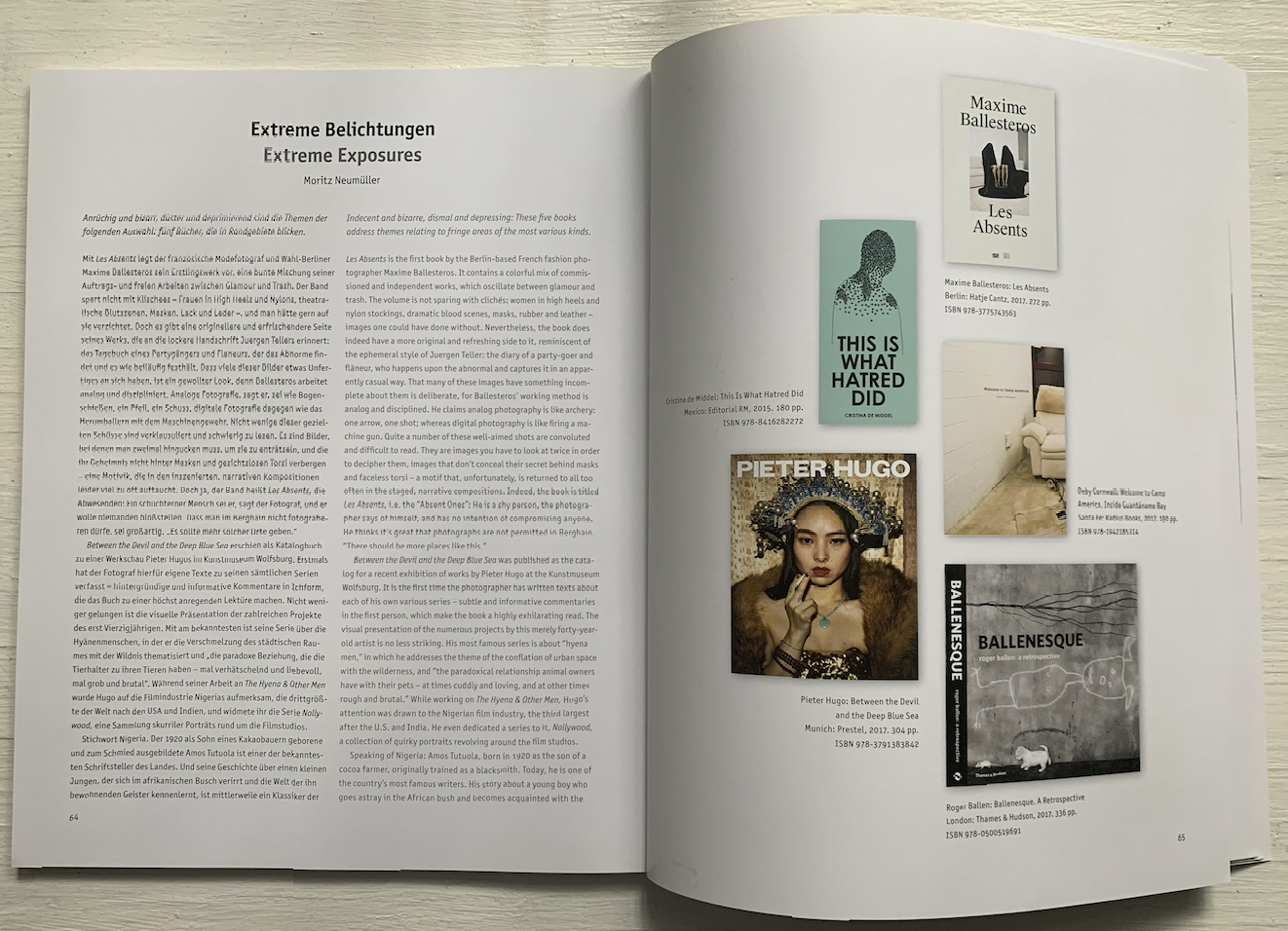
—WCA Profiled in European Photography Magazine #102.

"Although Cornwall understands the gravity of her topic, she approaches these dilemmas with an imaginative playfulness. . . The exhibition’s startling power derives from these jarring proximities: between pain and pleasure, boredom and entertainment, revealing and redacting, beauty and abuse. . . Cornwall foments a complicated mood, an absence of answers and identities."
—Zak Hatfield on the WCA exhibition at Steven Kasher Gallery, in The Guardian.

"Debi Cornwall’s impressive Beyond Gitmo shows former prisoners of the Guantánamo Bay detention center. . . Cornwall’s work maps ruined lives in times of perpetual war and failing international politics. "
—Wilco Versteeg, "Roaming Without End," Exhibition review of En Suspens at le Bal, Aperture Magazine.

"Welcome to Camp America, Inside Guantánamo Bay (Radius Books), [is] a surreal portrait inside one of the most horrific places on earth. . . What she saw was the eerie veneer of a culture invested in appearances above all. . . Cornwall invites viewers to piece together meaning using shiny fragments of a horror story that can be felt in the portraits made of 14 former detainees. . . ."
—Miss Rosen, "A Surreal Portrait of Guantánamo Bay," Huck Magazine.

—Teju Cole names Welcome to Camp America one of the ten "Best Photo Books of 2017," New York Times Magazine.

"Debi Cornwall’s photographic study of the Guantánamo Bay detention center paints the facility in a surreal light, foregrounding its Kafkaesque contradictions and leaving the reader with the sense of having visited a twisted extrajudicial Disney World. . . " With sequencing that "bemuses and horrifies" . . . WCA's "odyssey through Guantánamo Bay is an uncomfortable but vital one—it raises serious questions as to what America really stands for, and calls to mind what Hannah Arendt called the 'banality of evil.'"
—"The Ten Best Photography Books of 2017," Smithsonian Magazine.
"Welcome to Camp America is a weighty tome that has layers upon layers... A riveting insight into the Kafkaesque qualities of this infamous facility to attend to the details of the West’s military-industrial complex, post-9/11."
—Tim Clark, "Top 10 Photo Books of 2017," 1000 Words Magazine.
"The juxtaposition of this dark humour renders the reader conflicted, uneasy and curious. The design is immersive."
—Izabela Radwanska Zhang, on WCA, on view in the Paris Photo-Aperture First Photo Book Prize exhibition, British Journal of Photography.
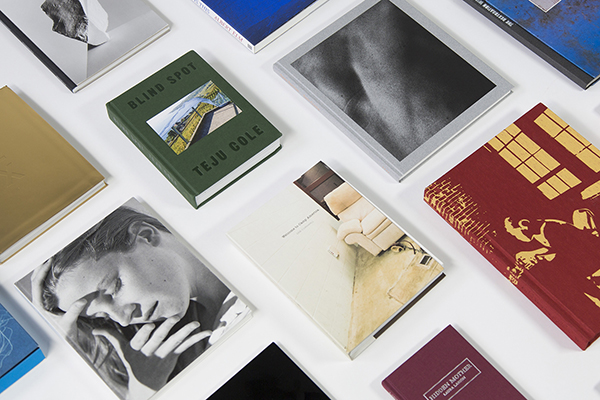
WCA shortlisted for the Paris Photo-Aperture First Photo Book Prize.

"Cornwall’s photographs provide a subtly layered study of an important chapter in American history. Intermingling investigative reporting with fine art aesthetics, her images constantly walk a knife-edge of interpretation, each a test of vantage point and state of mind, and it is this openness that makes the exhibit so thought-provoking and compelling. Her implied criticisms are measured, mixing the biting use of understated visual satire with a more sympathetic view of the plight of the detainees. While we never witness the horrors of torture that have become synonymous with the name Guantánamo Bay, the space in Cornwall’s photographs allows the viewer to extrapolate from the available evidence and to draw their own conclusions about the implications. By choosing a more considered approach, she’s allowed us to find our own way to certain nuanced truths and contradictions, offering us a line of thinking to follow that encourages active engagement and reconsideration."
—Loring Knoblauch on the WCA exhibition at Steven Kasher Gallery in Collector Daily.

"Debi Cornwall’s Welcome to Camp America: Inside Guantánamo Bay (Radius Books) is an exhaustively researched, exceptionally photographed documentation of one the most heavily guarded prisons in the world."
—Mark Murrmann, "These Photos Plunge You Into the Inner Madness of Guantánamo," Book review, Mother Jones.
WCA Shortlisted for the Photo-Text Award at les Rencontres d'Arles.
"Ultimately this book needs to be experienced personally to grasp its full impact. . . haunting, revealing, personal, and shocking. . . Welcome to Camp America may be the most important photobook I have read in 2017."
—Forrest Soper, Photo-Eye.
"The book she has compiled is riveting. The 'story' is told in layers, and it comes across as a mystery (or several mysteries) to uncover. . . The opening sequence of images and declassified, redacted government documents seduces and teases, like the opening of a horror-suspense film, with a series of memories, flashbacks, glimpses of evidence and obstruction. . . We are being given incomplete, government-censored pieces of an elaborate puzzle, one piece at a time. Slowly, though, vague stories begin to clarify, emerging from the fog, and become frightfully real."
—Jim Casper, Lensculture.

"[T]he effect is one of emotional dysfunction, keeling rapidly between laughter and abuse. It's sickening. And, because of that, also rather brilliant."
—Katherine Oktober Mathews reviews "Welcome to Camp America," GUP Magazines